
The Kedah property market in 2026 is no longer moving as a single market, it is diverging, with residential demand holding firm while other sectors face increasing pressure.
While residential demand continues to show resilience, commercial and industrial segments are experiencing short-term adjustments. At the same time, major infrastructure developments and large-scale land transactions suggest that longer-term opportunities remain intact.
For investors and developers, the key is no longer whether the market is growing, but where demand is moving and why.
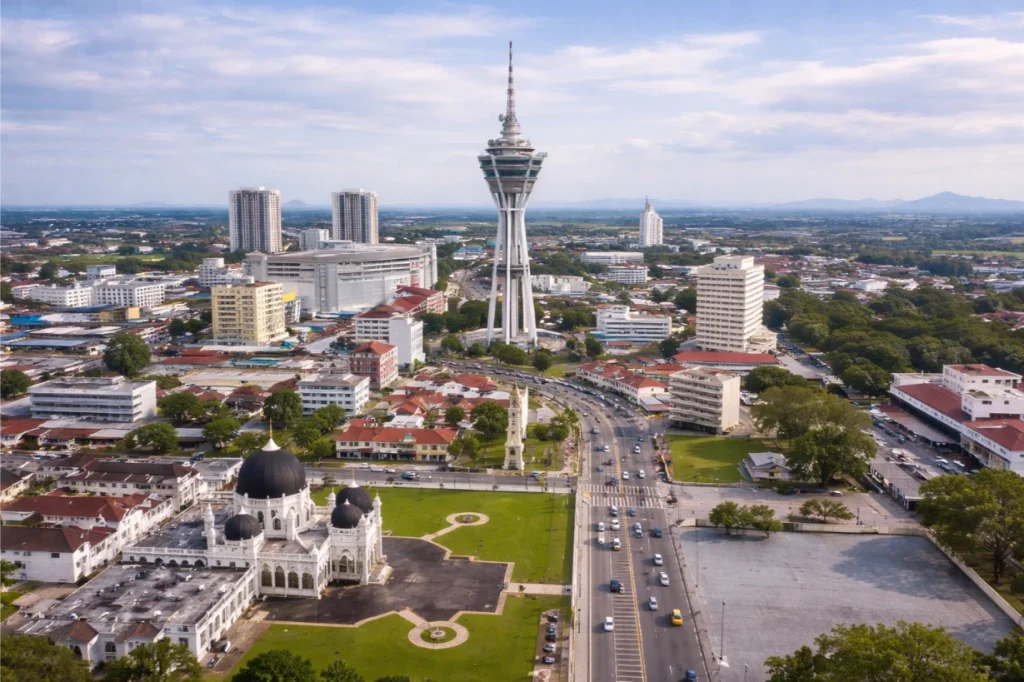
Is the Kedah Property Market Growing in 2026?
In simple terms, the Kedah property market is not declining. It is becoming more selective.
Residential demand remains stable, supported by affordability and owner-occupier demand. However, commercial and industrial segments are undergoing a short-term slowdown, reflecting broader economic caution and shifting investment priorities.
This mirrors wider trends seen across the property market Malaysia, where investors are becoming more targeted rather than broadly optimistic.
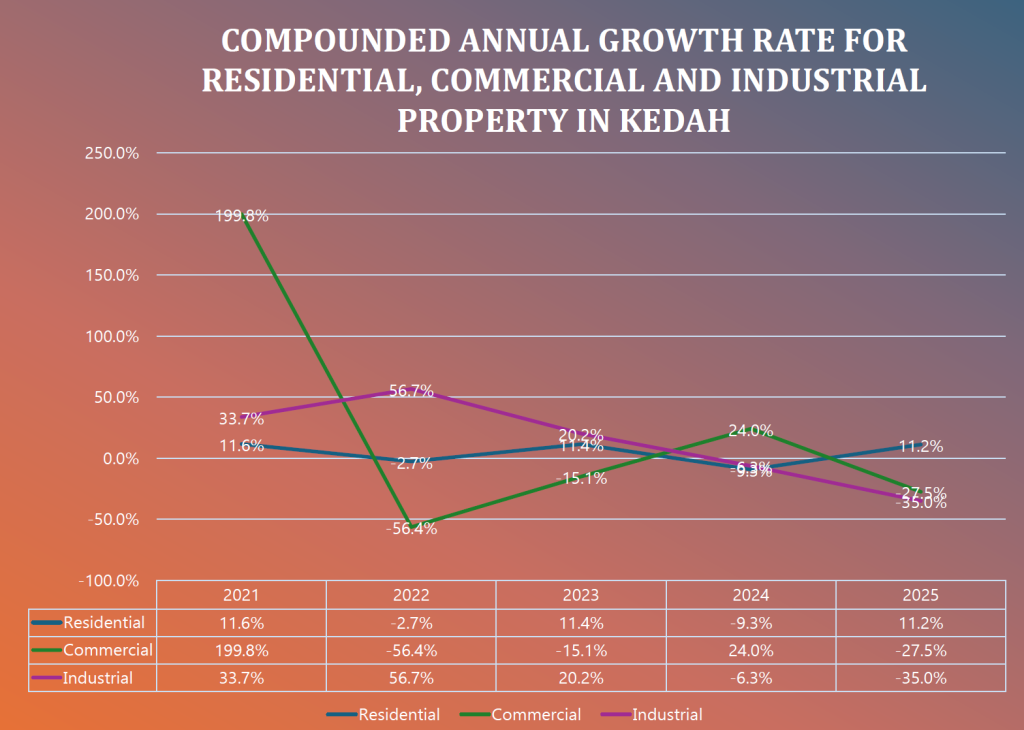
Kedah Property Market: CAGR Performance by Sector
Data source:
- Residential: +11.2% (2025)
- Commercial: -27.5%
- Industrial: -35.0%
Kedah Property Market Residential Sector Remains the Core Driver
The residential sector continues to anchor the Kedah property market.
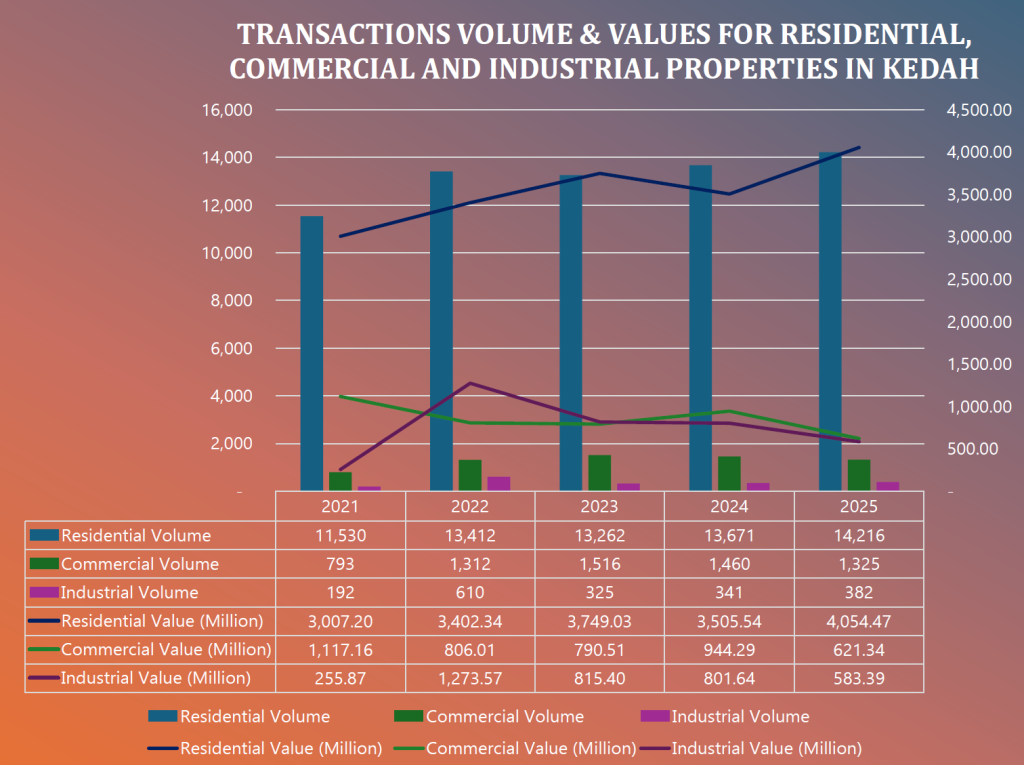
Transaction activity increased to 14,216 units in 2025, with total transaction value reaching approximately RM4.05 billion .
This growth is largely driven by:
- affordability compared to major urban centres
- steady demand from owner-occupiers
- gradual improvement in financing accessibility
Unlike more speculative markets, Kedah’s residential segment reflects fundamental demand rather than short-term investor-driven growth.
Increasingly, sustainability considerations are also shaping buyer preferences, particularly as ESG principles become more embedded in Malaysia’s property sector.
Residential Transaction Volume & Value
Kedah Property Market Commercial and Industrial Sectors Face Pressure
While residential remains resilient, both commercial and industrial segments have seen a contraction in 2025.
- Commercial CAGR: -27.5%
- Industrial CAGR: -35.0%
Transaction values for both sectors have also declined, indicating more cautious investment activity.
This does not necessarily signal structural weakness. Instead, it reflects:
- capital repositioning
- delayed investment decisions
- transitional market conditions
In many cases, these slowdowns occur before the next phase of growth, particularly in markets linked to infrastructure development.
Kedah Property Market Overhang Signals Supply Pressure
One of the clearest indicators of market imbalance is the increase in unsold units.
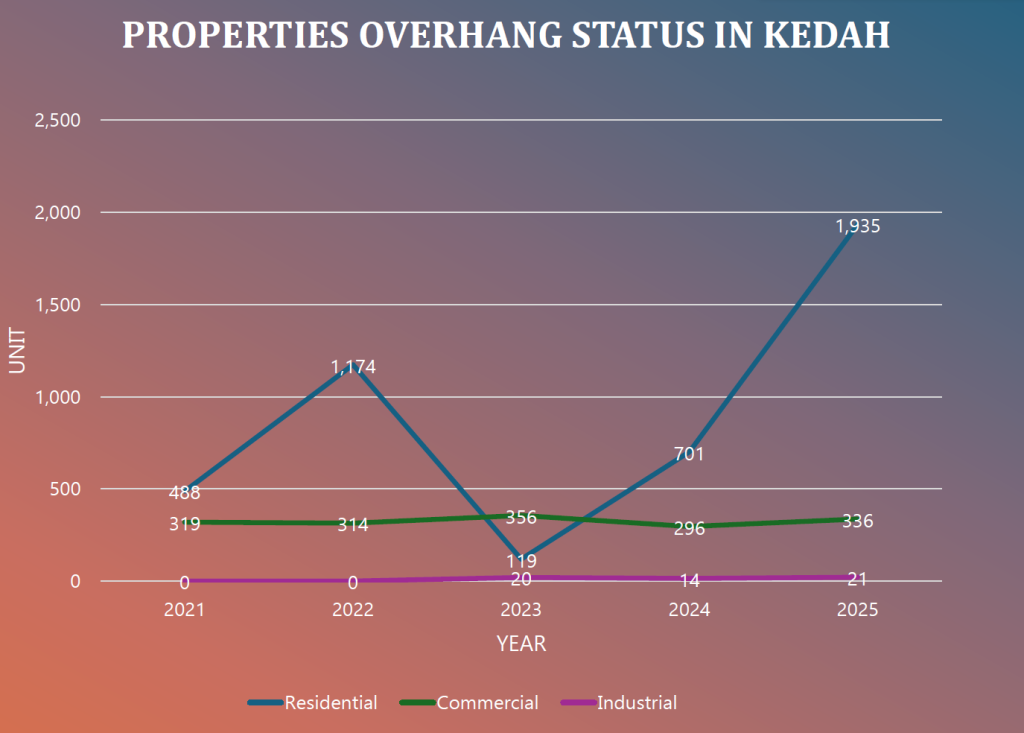
Residential overhang rose sharply by 176% (1,234 units) in 2025, while:
- Industrial overhang increased by 50%
- Commercial overhang increased by 13.5%
This suggests that supply is outpacing demand in certain segments, particularly in newly launched or less strategically located developments.
Property Overhang Trends in Kedah
Kedah Property Market Investment Activity Remains Strong
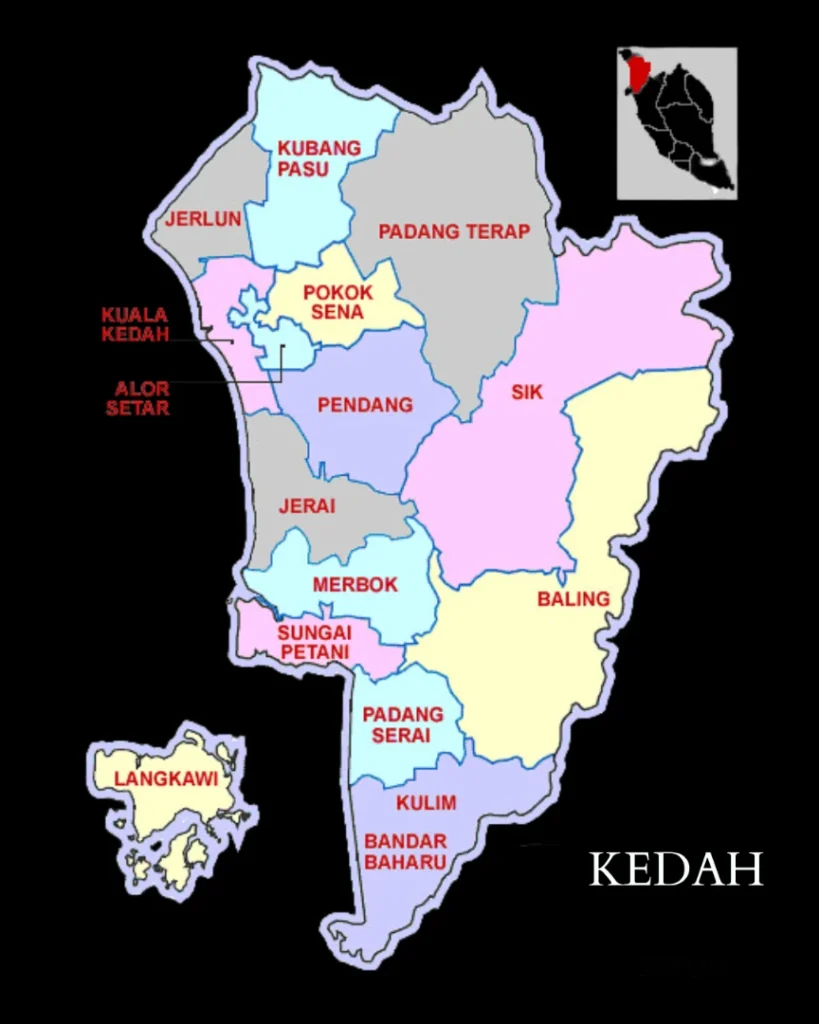
Despite short-term sectoral declines, capital continues to flow into Kedah through significant transactions.
Notable deals include:
- RM339 million development land in Kulim
- RM165 million healthcare facility in Alor Setar
- RM128 million development land in Kulim Hi-Tech area
These transactions indicate continued confidence in Kedah’s long-term development potential, particularly in areas linked to industrial and economic growth corridors.
Infrastructure and Industrial Growth: The Long-Term Story
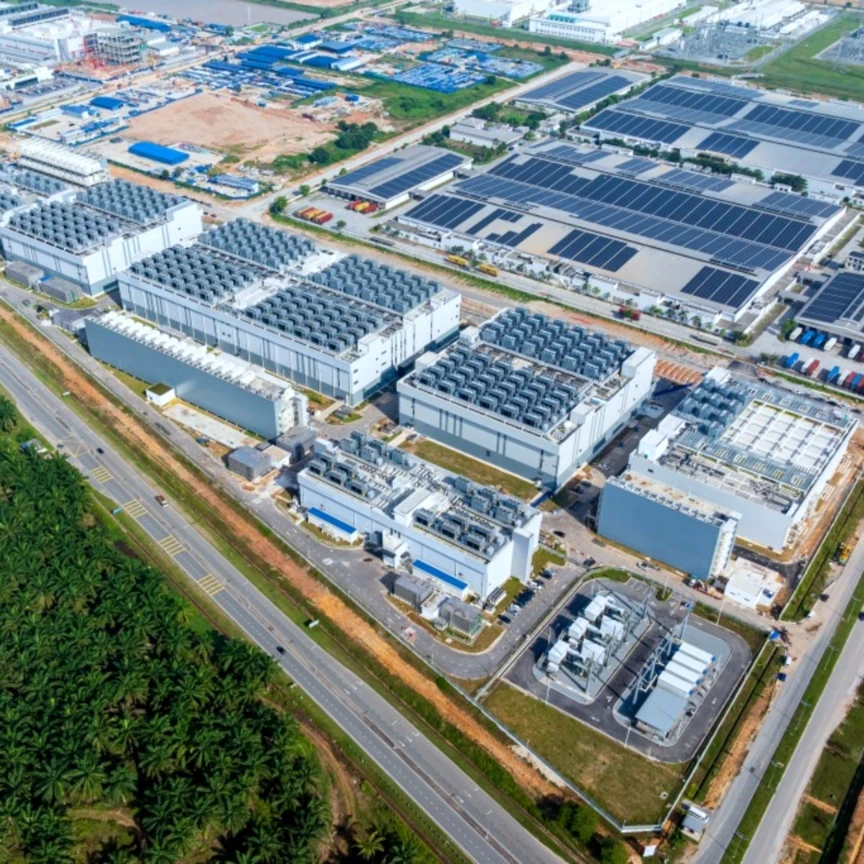
While industrial property performance has declined in the short term, infrastructure developments suggest a different long-term trajectory.
Major projects include:
- RM11.1 billion Pulau Bunting energy hub
- Sanglang Port (RM800M–RM1B) Malaysia–Thailand landbridge
- RM1.1 billion Bukit Kayu Hitam industrial park
These developments are expected to:
- strengthen cross-border trade
- expand logistics networks
- increase industrial demand
According to Malaysia’s National Investment Aspirations framework, infrastructure-led growth remains a key driver of regional economic expansion.
Similar to how major infrastructure projects such as the East Coast Rail Link (ECRL) are reshaping industrial property demand across other regions, Kedah’s logistics and cross-border connectivity could play a similar role over time.
What This Means for Property Investors
For investors, the Kedah property market requires a more selective and strategic approach.
Short-term:
- Residential remains stable
- Commercial and industrial show softness
- Supply pressures are increasing
Long-term:
- Industrial sector likely to rebound
- Infrastructure will drive demand
- Strategic locations outperform generic developments
Investors should focus on economic drivers rather than headline growth figures, particularly when evaluating different approaches to property investment in Malaysia.
Kedah Property Market in the Context of Malaysia
Within the broader property market Malaysia, Kedah represents a more affordable and emerging regional market.
Unlike Klang Valley or Penang, Kedah’s growth is:
- less speculative
- more infrastructure-driven
- more dependent on economic corridors
This positions Kedah as a market where opportunities are not immediate, but potentially significant over time.
For broader national context, Bank Negara Malaysia’s economic outlook highlights continued structural shifts in regional development and investment patterns.
Key Takeaways
- Residential sector remains the strongest performer
- Overhang levels are rising across multiple segments
- Commercial and industrial sectors are in a short-term adjustment phase
- Large-scale infrastructure projects support long-term growth
- Market performance is becoming increasingly selective
Conclusion: Kedah Property Market Is A Selective but Emerging Market
The Kedah property market in 2026 is not defined by rapid growth, but by changing dynamics and increasing selectivity.
For investors, the opportunity lies in understanding:
- where demand is shifting
- which sectors are transitioning
- how infrastructure will influence future growth
Rather than chasing short-term trends, those who focus on long-term economic drivers may be better positioned to benefit from Kedah’s evolving property landscape.