
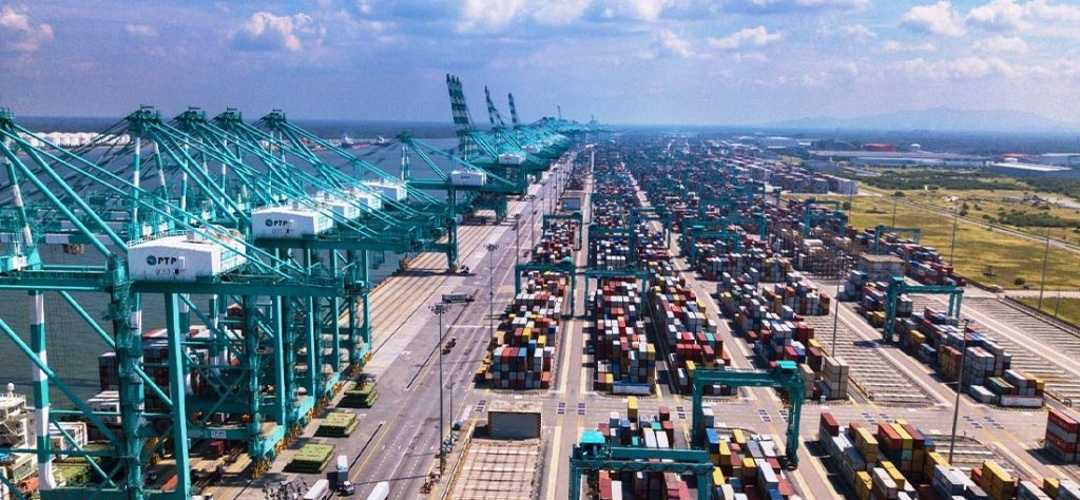
Industrial property refers to real estate used for manufacturing, logistics, warehousing, and distribution activities. In Malaysia, this includes factory facilities, industrial land, logistics warehouses, and modern distribution hubs that support supply chain operations.
The East Coast Rail Link (ECRL) is often discussed as a transformative infrastructure project for Malaysia’s East Coast. However, when it comes to real estate, the most significant property opportunities may not lie where many expect.
Rather than luxury condominiums or urban residential developments, the ECRL’s real estate impact is likely to be strongest in industrial property across Klang Valley’s western corridor.
As Malaysia approaches the operational phase of the ECRL, investors and developers are beginning to evaluate how improved logistics connectivity could reshape industrial demand, particularly around Port Klang and surrounding industrial zones.
Understanding the ECRL’s Economic Role
The ECRL is a 665-kilometre railway project linking Malaysia’s East Coast with the Klang Valley.
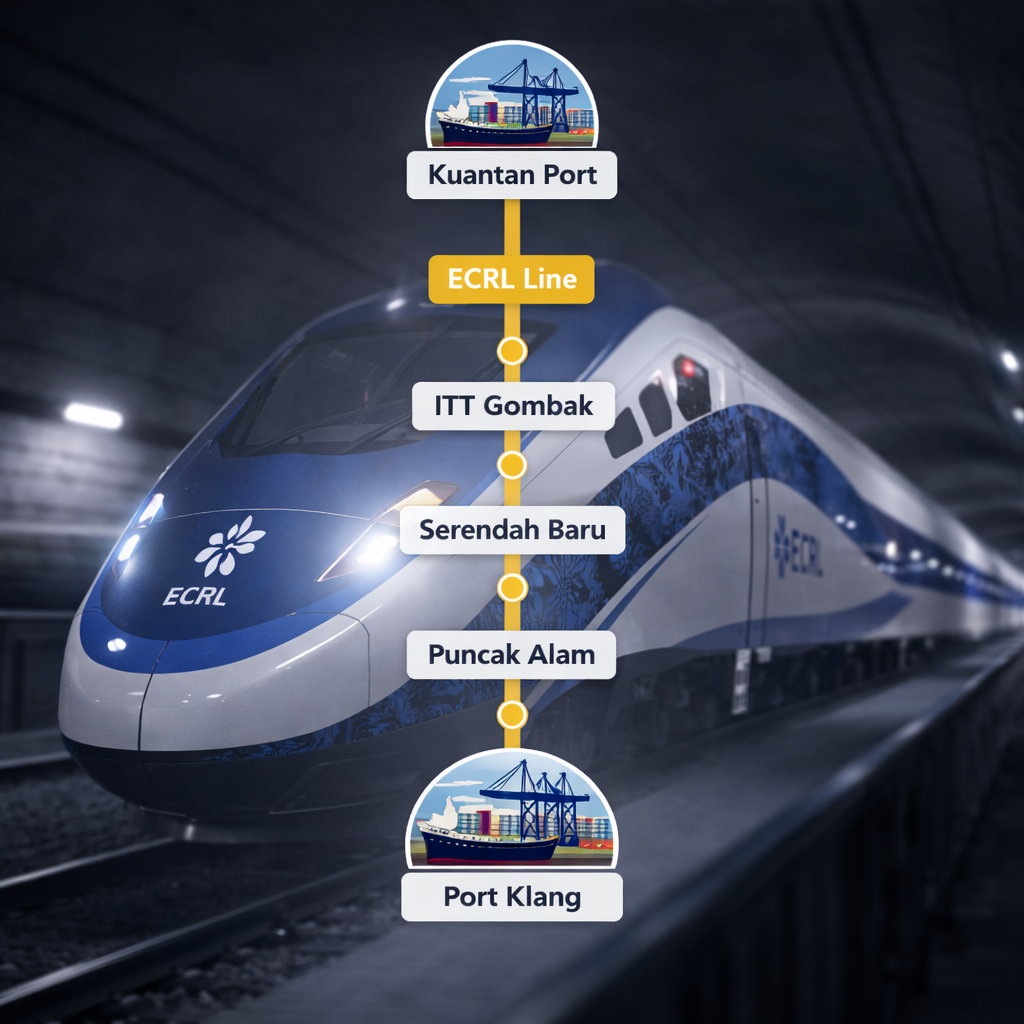
Rather than serving primarily as a commuter rail system, the ECRL is designed to function as a cargo and logistics corridor connecting:
- Kuantan Port (East Coast)
- Key inland economic nodes
- Port Klang (West Coast)
According to the Malaysia Rail Link ECRL Project Overview, this effectively creates a “land bridge” across Peninsular Malaysia, allowing goods to move more efficiently between ports and industrial zones.
Simplified ECRL Logistics Corridor
Why Industrial Property Could Benefit the Most
Infrastructure does not affect all real estate sectors equally.
While commuter rail systems often drive residential demand, freight-oriented infrastructure tends to benefit industrial and logistics property first.
For Klang Valley, this means the greatest real estate impact may appear in areas that support:
- logistics and warehousing
- industrial parks
- supply chain distribution hubs
- port-linked storage and processing facilities
These assets form the backbone of Malaysia’s trade and manufacturing ecosystem.
Malaysia’s Port Klang is one of Southeast Asia’s busiest maritime gateways, handling over 13 million TEUs (twenty-foot equivalent units) of cargo annually, according to the Port Klang Authority. As rail connectivity improves cargo movement between the East and West Coasts, logistics efficiency could further strengthen demand for industrial and warehousing facilities across Klang Valley.
Estimated Industrial Property Impact from the ECRL
| Property Type | Estimated Impact |
| Industrial land | High |
| Logistics warehouses | High |
| Commercial near stations | Moderate |
| Mid-range residential | Moderate |
| Luxury KL condominiums | Low |
Figure 2: Industrial and logistics real estate are structurally aligned with the ECRL’s cargo-driven economic function
Where the ECRL Corridor Runs in Klang Valley
Within Selangor, the ECRL follows the Northern Alignment, connecting the rail network to Port Klang.
Key nodes include:
- ITT Gombak – gateway station
- Serendah Baru – emerging industrial hub
- Puncak Alam – growing mixed industrial-residential area
- Kapar / Jalan Kastam – gateway to Port Klang
Because the route bypasses Kuala Lumpur’s city centre, the infrastructure’s property impact is likely to be concentrated in industrial and logistics zones rather than urban residential districts.
What Industrial Tenants Are Looking For
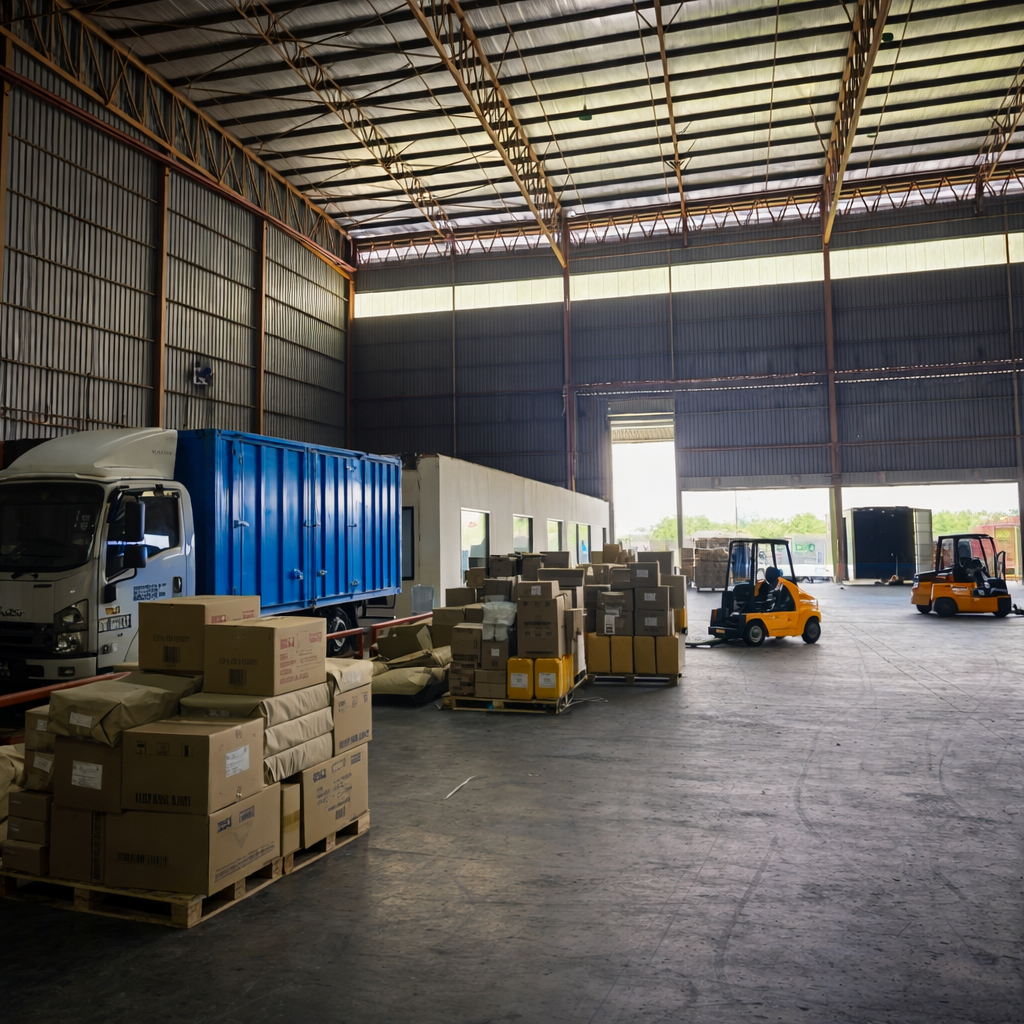
Industrial real estate demand has evolved significantly in recent years.
Today’s logistics operators increasingly prioritise:
- high clear-height warehouses
- efficient truck access and loading bays
- proximity to ports and highways
- ESG-compliant industrial facilities
- modern logistics infrastructure
These features are particularly relevant for multinational tenants operating across Southeast Asia.
Key Factors Driving Industrial Property Demand
| Industrial Tenant Requirement | Importance |
| Port connectivity | High |
| Highway accessibility | High |
| Modern logistics warehouses | High |
| ESG-ready industrial parks | Medium-High |
Figure 3: Infrastructure connectivity remains the dominant driver of industrial real estate demand.
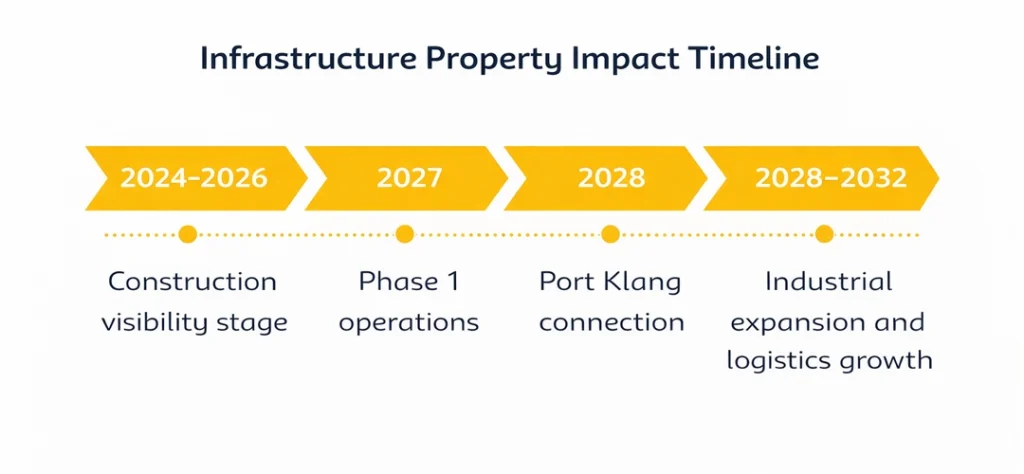
When Infrastructure Actually Impacts Industrial Property Markets
Infrastructure-driven real estate appreciation rarely happens overnight.
Instead, property markets tend to react in phases.
What Property Investors Should Watch
For investors evaluating industrial property opportunities in Klang Valley, the key signals to monitor include:
- expansion of logistics operators near Port Klang
- growth in warehouse development approvals
- rising cargo throughput at major ports
- increased demand for modern industrial facilities
When these indicators strengthen simultaneously, industrial property markets often experience sustained growth.
Why Infrastructure Analysis Matters for Property Investment
Many property investors focus on proximity to transport infrastructure alone. However, real estate value tends to follow economic activity rather than physical infrastructure itself.
In the case of the ECRL, this economic activity is most likely to emerge in:
- logistics corridors
- port-linked industrial clusters
- manufacturing supply chains
Understanding these dynamics allows investors to evaluate opportunities within the broader property investment Malaysia landscape more strategically.
What Property Investors Often Misunderstand About Infrastructure
One common misconception in property investment is the assumption that real estate value automatically rises near new rail infrastructure.
While this can be true for urban commuter systems, freight-focused infrastructure projects like the ECRL tend to influence property markets differently.
Rather than boosting residential demand around stations, freight corridors often strengthen logistics ecosystems, industrial clusters, and port-linked supply chains.
For Klang Valley, this means the most meaningful property impact may occur in industrial zones that support cargo movement and distribution networks, particularly those connected to Port Klang’s logistics infrastructure.
Understanding the economic function of infrastructure projects can help investors identify opportunities that may not yet be widely recognised in the broader property market.
Conclusion: The ECRL’s Real Estate Impact May Be Industrial
The ECRL represents one of Malaysia’s most significant infrastructure investments in recent decades.
While much of the public discussion focuses on passenger travel and regional connectivity, the railway’s economic design suggests a different real estate narrative.
For Klang Valley, the most meaningful property impact may emerge in industrial land, logistics hubs, and warehouse assets linked to Port Klang’s supply chain ecosystem.
As the ECRL moves closer to operational stages in the coming years, understanding these infrastructure-driven economic corridors could help property investors identify opportunities before they become widely recognised.